How Hard Water Stains Form on Rental Surfaces
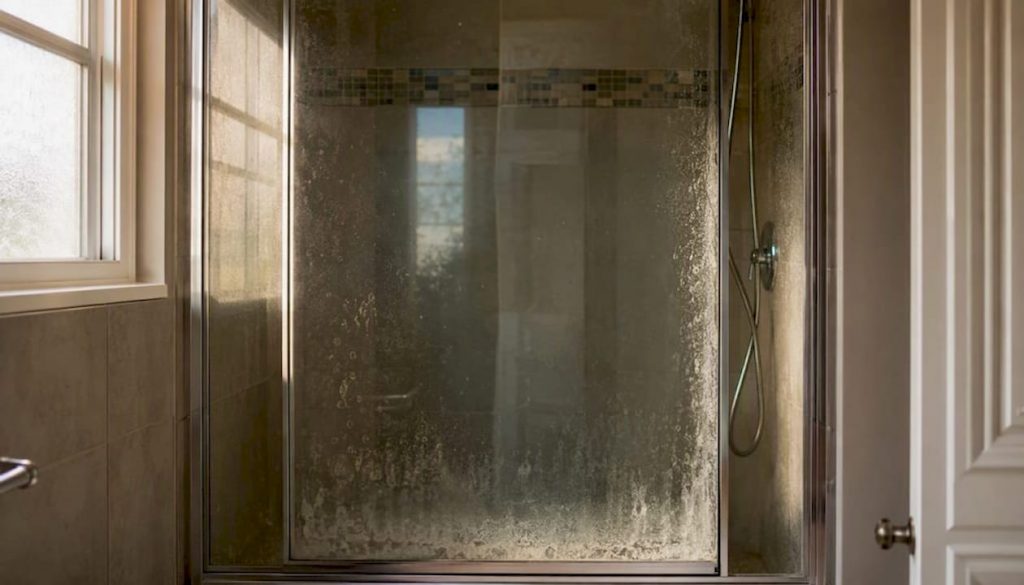
Hard water stains are mineral deposits — primarily calcium and magnesium — left behind when water evaporates from a surface. In U.S. rentals, they’re almost always classified as a cosmetic issue, which means routine cleaning falls on the tenant. The landlord’s responsibility kicks in only when mineral buildup causes functional damage: a clogged pipe, a failed heating element, or a dishwasher that stops draining.
Here’s the short version of who handles what:
- Tenant responsibility: Day-to-day cleaning of stained shower glass, faucets, toilets, and appliances; squeegee and wipe-dry habits; reporting problems promptly.
- Landlord responsibility: Plumbing repairs caused by scale buildup, appliance replacement when mineral damage is the root cause, and water-quality issues that affect habitability.
- Immediate action for both sides: Document the condition at move-in with dated photos, clean what you can with household acids, and report anything that looks like system-level damage in writing.
Key Takeaways
Hard water stains form when mineral-rich water evaporates on a surface, leaving calcium and magnesium deposits that grow harder to remove the longer they sit.
| Point | Details |
|---|---|
| Stain formation | Minerals deposit when water evaporates; heating accelerates buildup in kettles and water heaters. |
| Tenant vs. landlord | Routine cosmetic cleaning is the tenant’s duty; functional damage from scale is the landlord’s repair. |
| Prevention first | Daily squeegee use, wipe-dry habits, and hydrophobic glass sealants slow deposit formation substantially. |
| Removal method | Apply acid (vinegar or citric acid), soak, agitate gently, rinse, and dry — never use acids on natural stone. |
| E and R Cleaning Solutions | Offers professional hard-water stain removal, window cleaning, and pressure washing for rental turnovers. |
Table of Contents
- What “hard water” actually means for your rental
- How hard water stains form on rentals: the chemistry behind the buildup
- Where hard water stains show up most in rental properties
- Are hard water stains permanent? When deposits become lasting damage
- Who pays and when: renter vs. landlord responsibilities in U.S. rentals
- Proactive prevention and routine maintenance that actually work
- How to remove hard water stains: surface-by-surface steps
- When to call a professional: methods, costs, and what to ask
- A practical take on balancing tenant and landlord responsibility
- Hard-water stain removal and property maintenance from E and R Cleaning Solutions
- Sources
What “hard water” actually means for your rental
Water becomes “hard” when it picks up dissolved calcium and magnesium ions as it moves through limestone and chalk rock formations underground. The more of those ions per liter, the harder the water. Iron sometimes tags along, which is what produces the rust-orange staining you see around toilet waterlines and older faucets.
Hardness comes in two forms. Temporary hardness is caused by calcium bicarbonate, which breaks down when heated and drops out of solution as solid calcium carbonate (limescale). Permanent hardness comes from calcium and magnesium sulfates, which stay dissolved even when boiled and require chemical treatment to remove.
The U.S. Geological Survey defines water hardness as the concentration of dissolved calcium and magnesium and notes that hardness varies significantly across U.S. regions — from very soft water in parts of the Pacific Northwest to extremely hard water across much of the Southwest, Midwest, and Texas.
That regional variation matters for landlords and property managers. A rental in Phoenix or Las Vegas sits in some of the hardest water territory in the country, meaning stains form faster, scale builds thicker, and appliances wear sooner than in, say, Seattle.
How hard water stains form on rentals: the chemistry behind the buildup
The process is straightforward. Water sits on a surface, evaporates, and leaves its dissolved minerals behind as a white or off-white crust. Repeat that cycle daily on a shower door or faucet base, and the deposit thickens layer by layer.
Heating accelerates everything. When water in a kettle or water heater reaches high temperatures, calcium bicarbonate converts to calcium carbonate, which is insoluble and precipitates immediately as limescale. That’s why kettles and water heaters scale far faster than cold-water fixtures — the chemistry is being driven by heat, not just evaporation.
Soap adds another layer of complexity. When soap mixes with hard water, the calcium and magnesium ions react with the soap’s fatty acids to form a sticky, insoluble compound called soap scum. It’s not the same as limescale, but it bonds to the same surfaces and traps more mineral deposits underneath it.
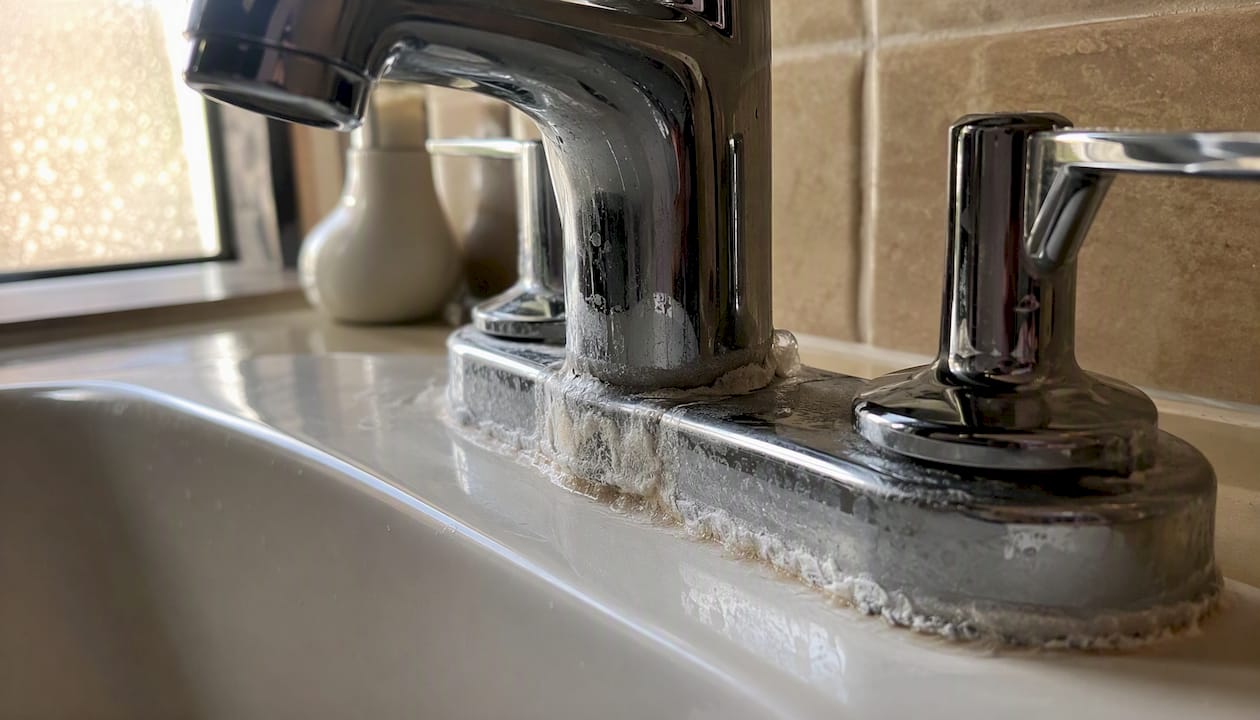
Because these minerals are alkaline, acidic cleaners like white vinegar or citric acid dissolve them most effectively — they neutralize the alkaline deposit and break it loose from the surface.
| Stain Type | Primary Minerals | Common Hotspots | Removal Chemistry |
|---|---|---|---|
| Limescale | Calcium carbonate | Kettles, water heaters, showerheads | Acid (vinegar, citric acid) |
| Soap scum | Calcium/magnesium fatty acid salts | Shower glass, tile, tub surrounds | Acid + mild abrasive |
| Iron/rust stains | Iron oxide | Toilet waterline, sinks, older pipes | Oxalic acid or rust remover |
Where hard water stains show up most in rental properties
Anywhere water sits and evaporates is a target. In practice, that means:
- Shower glass and tile grout: The most visible problem in most rentals. Water hits the glass, runs down, and leaves a mineral film with every shower.
- Chrome and brass faucets: Mineral deposits collect at the base and around the aerator, eventually restricting flow.
- Toilet waterline: A brown or rust-colored ring at the waterline is almost always iron or manganese, not mold.
- Dishwashers: Interior walls and the spray arm holes accumulate limescale; glassware comes out cloudy.
- Kettles and coffee makers: Heating accelerates mineral precipitation, so these appliances scale faster than almost anything else in the unit.
- Stainless steel sinks: White haze around the drain and faucet base is calcium carbonate, not corrosion.
- Windows near irrigation sprinklers: Sprinkler water is often harder than tap water and leaves white mineral spots on exterior glass that bond quickly to the surface.
- Countertops (natural stone): Granite and marble are especially vulnerable because the stone is porous and the acid you’d normally use to remove deposits can etch the surface.
Plumbing age matters here. Older galvanized pipes corrode and add iron to the water supply, intensifying rust staining at every fixture. Fixture finish matters too: polished chrome shows deposits immediately, while brushed nickel hides them longer but is harder to clean without scratching.
Pro Tip: Check the showerhead aerator and faucet screens at move-in. Restricted flow is a sign of existing mineral buildup inside the fixture — document it with a photo before you ever turn on the tap.
Are hard water stains permanent? When deposits become lasting damage
Most hard water stains are removable if you catch them early. The problem is time. The longer deposits sit, the more they bond to the surface, and on certain materials, they stop being a cleaning problem and become a structural one.
Glass is the clearest example. Mineral deposits are mildly acidic over time and physically abrade the glass surface at a microscopic level. Once that etching occurs, no cleaning method will restore the original clarity — the surface erosion is permanent. A shower door that’s been neglected for two or three years in a hard-water area may need replacement, not cleaning.
Natural stone faces a different risk. Marble and limestone are calcium-based, which means the acidic cleaners you’d use on glass or chrome will etch the stone surface itself. The damage looks similar to mineral staining but is caused by the cleaning attempt, not the water.
For appliances, the timeline is less about aesthetics and more about function. A water heater with heavy limescale on its heating element works harder, uses more energy, and fails sooner. Dishwasher spray arms clogged with scale stop cleaning effectively. These are the failure points where a cosmetic issue becomes a landlord’s repair problem.
On cost: DIY descaling with vinegar or citric acid costs a few dollars and works well on early-stage deposits. Professional descaling for a badly scaled water heater or a full bathroom restoration runs higher, with costs varying by region and scope. Replacing etched shower glass or a failed heating element costs significantly more than either cleaning option.
Who pays and when: renter vs. landlord responsibilities in U.S. rentals
The short answer: hard-water stains are generally treated as cosmetic cleanliness issues in U.S. rentals, which puts routine cleaning on the tenant. Landlords step in when mineral buildup causes functional damage.
Here’s how that plays out in practice:
- Tenant cleans cosmetic stains. Shower glass, faucets, toilet bowls, and appliance interiors are standard tenant maintenance. A lease that requires “clean condition” at move-out includes these surfaces.
- Tenant reports functional problems. If a faucet aerator is completely blocked, a showerhead has no pressure, or the dishwasher isn’t draining, the tenant should report it in writing. The cause may be mineral buildup the landlord needs to address.
- Landlord repairs plumbing and appliances. When scale buildup causes a pipe to restrict flow, a water heater to fail, or an appliance to malfunction, that’s a functional repair — the landlord’s domain.
- Landlord considers water quality. In extreme cases where water hardness makes normal cleaning impossible or damages fixtures rapidly, a tenant can argue the issue affects habitability. This is rare but documented in some jurisdictions.
For move-in and move-out documentation, both sides benefit from a checklist that includes:
- Condition of shower glass (cloudy, etched, or clear)
- Faucet aerator flow (restricted or normal)
- Toilet waterline (stained or clean)
- Dishwasher interior and glassware condition
- Window glass near sprinkler zones
Pro Tip: Date-stamp every photo at move-in and move-out. If a dispute arises over whether staining was pre-existing or tenant-caused, timestamped photos are the clearest evidence either side can produce. See landlord cleaning compliance best practices for a fuller documentation framework.
Proactive prevention and routine maintenance that actually work
The most cost-effective approach to hard water stains in rentals is preventing them from bonding in the first place. Once a deposit has been sitting for weeks, removal takes real effort. A 30-second habit after every shower costs nothing.
Practical prevention habits:
- Squeegee shower glass after every use. This single habit removes most of the water before it can evaporate and deposit minerals. A good squeegee and microfiber cloth hung in the shower makes it effortless.
- Wipe faucet bases and sink surrounds dry after use. Chrome and stainless steel show deposits fast; a quick wipe prevents the cycle from starting.
- Use rinse aid in the dishwasher. Rinse aid lowers water’s surface tension so it sheets off glassware instead of beading and evaporating on it.
- Apply a hydrophobic sealant to shower glass. Hydrophobic coatings make water bead and roll off rather than sit and evaporate, slowing deposit formation substantially. Reapply every few months.
- Descale kettles and coffee makers monthly with a citric acid solution or diluted white vinegar.
- Use filtered or distilled water for final glassware rinses if cloudiness is a persistent problem.
For property managers, source-level solutions are worth evaluating. Ion-exchange water softeners remove calcium and magnesium from the supply water and are the only permanent prevention option. Point-of-use filters and salt-free scale-control systems can reduce visible deposits in some conditions but don’t exchange hardness ions the way softeners do — they’re a partial solution, not a permanent fix. Whole-home softener installation costs vary by system size and local labor rates; point-of-use filters are significantly cheaper upfront but address only one fixture.
Pro Tip: Simple daily habits — squeegee, wipe dry, rinse aid — dramatically slow stain buildup and reduce the need for deep cleaning. Cleaning pros consistently recommend shifting from reactive scrubbing to proactive prevention as the single highest-leverage change renters can make.
How to remove hard water stains: surface-by-surface steps
The core method across most surfaces is the same: apply an acid, let it soak, agitate gently, then rinse and dry. What changes is the acid concentration, the soak time, and the tool you use to agitate.
-
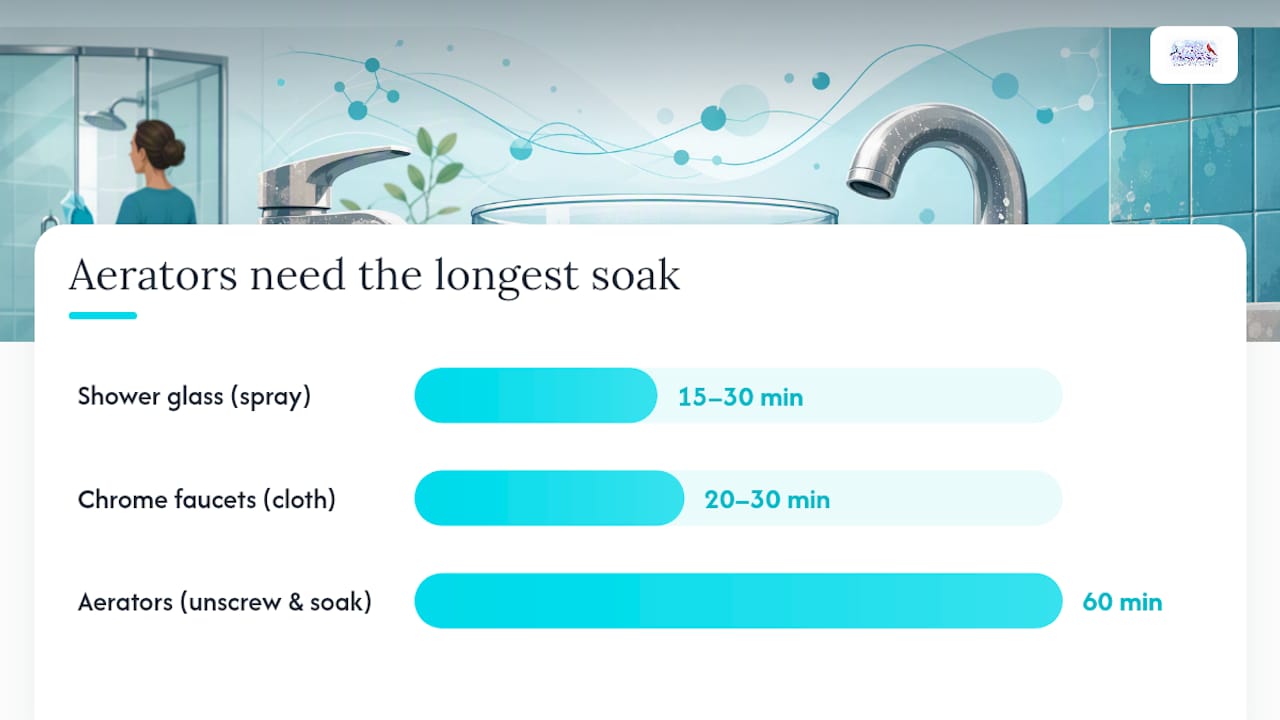
Shower glass. Spray undiluted white vinegar or a citric acid solution directly on the glass. Let it sit for 15–30 minutes, then scrub with a non-scratch sponge. Rinse thoroughly and squeegee dry. For heavy buildup, repeat or use a commercial descaler formulated for glass. Never use steel wool or abrasive pads — they scratch the surface permanently.
-
Tile and grout. Apply a vinegar-and-water solution (equal parts) to tile. For grout, make a baking-soda paste, apply it, then spray with vinegar to activate. Scrub with a stiff grout brush. Rinse well. Avoid vinegar on natural stone tile — use a pH-neutral cleaner instead.
-
Chrome faucets. Soak a cloth in white vinegar and wrap it around the faucet base and spout for 20–30 minutes. The acid loosens the deposit without scratching the chrome. Wipe clean with a microfiber cloth. For aerators, unscrew them and soak directly in vinegar for an hour.
-
Stainless steel sinks. Use a diluted vinegar solution and a soft cloth. Baking-soda paste works for stubborn spots. Always wipe in the direction of the grain to avoid micro-scratches. Rinse completely — leaving acid on stainless steel too long can dull the finish.
-
Toilets. Pour white vinegar into the bowl, let it sit for 30 minutes, then scrub with a toilet brush. For the waterline ring, a pumice stone works well on porcelain without scratching — wet both the stone and the surface before use. Never use a pumice stone on colored or coated toilet surfaces.
-
Natural stone (marble, granite). Skip vinegar entirely. Acids etch calcium-based stone surfaces. Use a pH-neutral stone cleaner and a soft cloth. For stubborn deposits, consult a stone restoration professional — DIY attempts on marble often make the problem worse.
-
Dishwashers and glassware. Run an empty dishwasher cycle with a cup of white vinegar on the top rack. For cloudy glassware, soak in a vinegar-and-water solution for 30 minutes, then wash normally. Check and clean the spray arm holes with a toothpick if flow seems restricted.
-
Kettles and coffee makers. Fill halfway with equal parts white vinegar and water, bring to a boil (kettle) or run a brew cycle (coffee maker), then let it sit for 30 minutes. Rinse with two full cycles of clean water before using again.
-
Windows and screens. For exterior mineral spots from sprinklers, a diluted white vinegar solution applied with a soft cloth or sponge works on glass. Rinse thoroughly. For window screens, remove them, lay flat, and apply the solution with a soft brush. Avoid abrasive tools on screens — they distort the mesh. For heavy exterior mineral deposits on windows, professional window cleaning is often faster and safer than DIY.
Safety note: Always wear gloves when working with vinegar or commercial descalers. Work in a ventilated space. Never mix vinegar with bleach — the combination produces chlorine gas. And if a surface shows etching or the stain won’t respond after two or three attempts, stop and call a professional rather than escalating to stronger acids.
When to call a professional: methods, costs, and what to ask
Call a professional when deposits are extensive, when surfaces show etching, when strong commercial chemicals are required, or when tenant-level cleaning has failed repeatedly. That last point matters more than most renters realize — repeated scrubbing with the wrong tool can scratch a surface and make it harder to clean going forward.
Typical professional methods include:
- Steam cleaning: High-temperature steam loosens mineral deposits without chemicals, useful for grout and tile where acid could discolor grout.
- Commercial descalers: Stronger acid formulations than household vinegar, used by pros with proper ventilation and protective equipment.
- Glass restoration compounds: Polishing compounds that can reduce (but not eliminate) light etching on glass surfaces.
- Soft washing: Low-pressure application of cleaning solutions for exterior surfaces and delicate materials where pressure washing would cause damage.
- Water-softener installation: For property managers dealing with chronic hard-water problems across multiple units, a whole-home softener addresses the source rather than the symptoms.
- Pressure washing between tenancies: Effective for exterior mineral stains on driveways, siding, and building exteriors.
Cost ranges vary by region, surface type, and severity. A professional window cleaning that includes hard-water stain removal typically costs less than glass replacement. Water-softener installation is a larger investment but reduces ongoing cleaning costs and appliance wear across the property.
Pro Tip: Before booking any contractor for hard-water stain removal, ask three questions: Are you licensed and insured? What specific method will you use on this surface, and why? Do you offer any guarantee if the stain doesn’t respond? A contractor who can’t answer all three clearly is not the right choice for a job that could permanently damage a fixture if done wrong.
A practical take on balancing tenant and landlord responsibility
Hard water is an environmental condition, not a maintenance failure — and that distinction gets lost in most landlord-tenant disputes about staining. The tenant didn’t cause the water to be hard. The landlord didn’t install the plumbing to create stains. Both sides are dealing with a chemistry problem that requires consistent management, not blame.
The landlords and property managers who handle this best treat hard water as a predictable maintenance variable, not a surprise. They document fixture condition at move-in, schedule descaling of water heaters and appliances annually, and consider hydrophobic glass coatings as a standard turnover upgrade rather than an optional extra. That approach reduces disputes, extends fixture life, and keeps turnover costs predictable.
Recommended policies for landlords and property managers:
- Include hard-water surface condition in move-in and move-out checklists, with photos.
- Schedule annual descaling of water heaters, dishwashers, and showerheads as part of seasonal property maintenance.
- Apply hydrophobic sealant to shower glass at every turnover.
- Provide tenants with a one-page guide to daily prevention habits (squeegee, wipe-dry, rinse aid) at lease signing.
- Respond in writing to any tenant report of restricted flow or appliance malfunction — mineral buildup as a cause should be investigated, not dismissed.
Hard-water stain removal and property maintenance from E and R Cleaning Solutions
Hard-water deposits on windows, shower glass, and exterior surfaces are some of the most stubborn problems at rental turnovers — and the ones most likely to generate disputes if left unaddressed. E and R Cleaning Solutions specializes in exactly this: professional interior and exterior window cleaning with hard-water stain removal, and pressure washing for exterior mineral buildup on driveways, siding, and building exteriors.

For property managers and landlords, the difference between a quick turnover and a costly one often comes down to whether glass and exterior surfaces were properly treated between tenancies. E and R Cleaning Solutions offers custom-quoted service for one-time turnover cleans and recurring maintenance plans, with transparent pricing and no long-term contracts. Ask about specialized window cleaning for hard-water marks and exterior pressure washing packages when you request a quote.
Sources
- Hardness of Water — U.S. Geological Survey
- Cleaning Pros Explain the Best Way to Remove Hard Water Stains
- Is Hard Water a Landlord’s Responsibility?
- How to Prevent Hard Water Stains on Glass (And Get Rid of the Ones Already There) – Watercure USA
- How to Remove Hard Water Stains (and Stop Them Returning)
- How to Remove Hard Water Stains (Family Handyman)
- What to know about hard water and water softeners (Consumer Reports)
- What are hard water stains? (RayneWater blog)