$0.05–$0.40/Sq Ft: 2026 U.S. Commercial Pressure Washing Costs
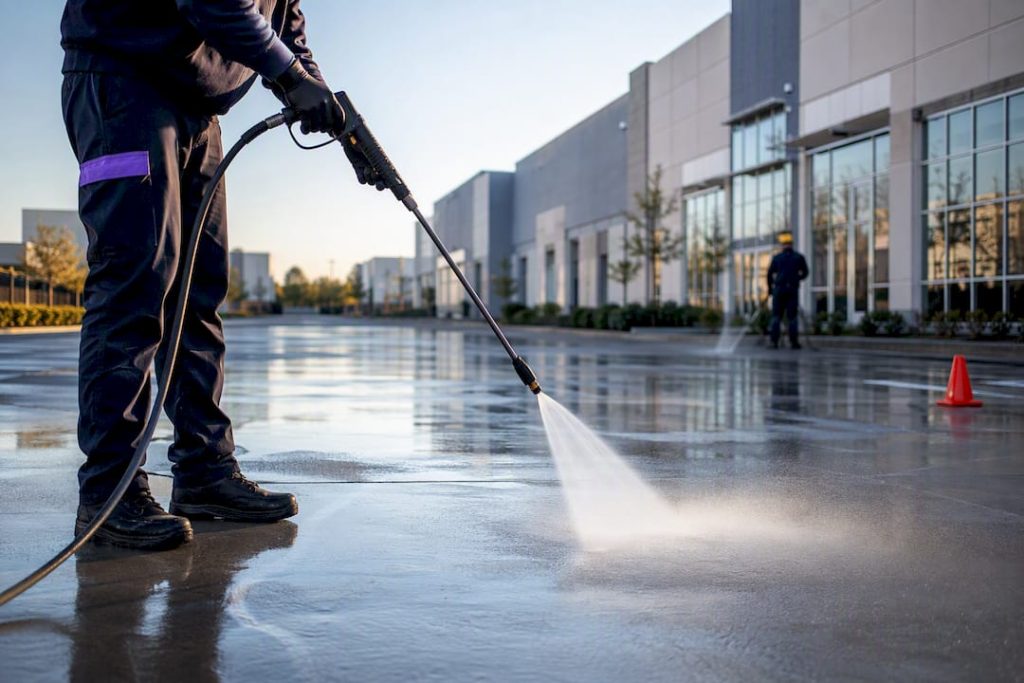
Most commercial pressure washing jobs in the United States run $0.05 to $0.40 per square foot, with total project costs typically landing between $200 for a small storefront wash and $15,000 or more for a full shopping center or parking structure. The exact number depends on your surface type, soil level, water access, and site logistics, which is why no honest contractor quotes a firm price without seeing the property first. Compare at least two on-site estimates before you sign anything.
TL;DR:
- Larger properties with heavy staining or containment needs can significantly exceed the typical per-square-foot ranges, sometimes costing over $10,000 per full service.
- Pricing for soft washing or high-pressure methods varies based on material sensitivity, height, and access, with soft washing generally costing more per square foot.
- On-site surveys are essential for accurate quotes because soil level, accessibility, and runoff requirements heavily influence final costs.
- Contractors often have a minimum fee of $100 to $500, which can impact small projects despite low per-square-foot estimates.
- Recurring contracts generally reduce per-visit costs by about 10-20%, making regular maintenance more economical for property management.
Table of Contents
- What Does Commercial Pressure Washing Cost Per Square Foot?
- What Factors Actually Drive Your Quote Up or Down?
- How Should You Compare Commercial Pressure Washing Quotes?
- Sample Budget Estimates for Common Commercial Properties
- Why Trust This Pricing Breakdown?
- How Do Pressure Washing Methods Compare on Cost?
- How Long Does a Commercial Pressure Washing Job Take?
- What Are You Actually Paying For?
- What Do Different Business Types Typically Pay?
- Stop Budgeting Off Rate Cards, Start Budgeting Off Reality
- Get an Accurate Commercial Pressure Washing Quote
- Sources
What Does Commercial Pressure Washing Cost Per Square Foot?
Pricing varies more by surface and contamination level than almost anything else. Concrete flatwork with light dust costs far less to clean than a grease-caked dumpster corral or an algae-streaked masonry facade, and contractors price accordingly.
Industry pricing guides put commercial flatwork in the $0.05 to $0.20 per square foot range for straightforward jobs, while broader estimates that fold in labor, chemicals, overhead, and margin push the commercial band to $0.08 to $0.40 per square foot. Here’s how that breaks down by surface:
- Parking lots and garages: roughly $0.08 to $0.25 per square foot, with the low end applying to large, lightly soiled lots
- Sidewalks and general flatwork: typically $0.05 to $0.20 per square foot
- Storefronts and restaurant frontage: $0.12 to $0.20 per square foot, reflecting the detail work around windows, signage, and entryways
- Building exteriors (soft wash or high pressure): varies widely by height and material, often priced per project rather than per square foot
- Dumpster pads and grease areas: usually quoted as a flat fee rather than per square foot, since these spots need extra degreaser and scrubbing regardless of size
Most contractors also carry a minimum service fee, commonly $100 to $500, so a tiny job still covers mobilization, insurance, and setup time. Expect regional pricing swings tied to local labor costs. The Bureau of Labor Statistics tracks wage differences across metro areas, and those differences show up directly in crew-hour rates. Winter and early spring bookings in colder states sometimes carry a premium too, since fewer crews operate outdoors and demand clusters once temperatures rise.
What Factors Actually Drive Your Quote Up or Down?
Two properties with identical square footage can get wildly different quotes, and the gap almost always traces back to a handful of variables.
- Surface material and soil type. Concrete tolerates high-pressure cleaning well, but brick, stucco, and painted siding often need a soft-wash approach with lower pressure and specialized detergents to avoid damage. Heavy oil stains, gum, or biological growth like algae and mildew add scrubbing time and chemical cost that a simple dust wash never requires.
- Accessibility and equipment needs. A single-story storefront is quick work. A three-story office building needs lifts or scaffolding, and confined loading docks or tight urban alleys slow crews down and raise labor hours.
- Water supply and containment. Contractors either tap your on-site water or haul their own, and either choice affects price. More importantly, the Clean Water Act restricts wastewater discharge into storm drains, so jobs near drains or waterways often require containment mats, vacuum recovery, or approved disposal, all of which add to the bill.
- Insurance, permits, and scheduling. Commercial contracts typically demand higher liability coverage than residential jobs, and busy retail centers may require traffic control or after-hours scheduling to avoid disrupting customers. Both push crew-hour rates higher, a pattern well documented across commercial service pricing.
Pro Tip: Ask any contractor point-blank how they handle runoff. If they shrug off the question, that’s a sign they’re not accounting for containment costs, which usually means a lowball bid that gets revised later.
How Should You Compare Commercial Pressure Washing Quotes?
Contractors price commercial work using four main models, and knowing which one you’re looking at helps you compare bids fairly.
- Per-square-foot pricing works best for large, uniform areas like parking lots or long sidewalk runs.
- Flat-fee pricing shows up for defined, contained jobs, think a single dumpster pad, a loading dock, or a storefront facade.
- Hourly or crew-hour pricing applies when the scope is unpredictable, such as heavy graffiti removal or unknown staining that needs assessment on arrival.
- Contract pricing covers recurring maintenance, usually quarterly or monthly visits at a locked-in rate.
A legitimate commercial quote should spell out the scope of work, what’s excluded, the minimum fee, disposal or containment charges, insurance coverage limits, and an estimated timeline. If any of those five items are missing, ask before you sign.
Before hiring, ask: What’s included in the base price versus billed as an add-on? What insurance do you carry, and can I see a certificate? How do you handle wastewater? What happens if soil levels turn out heavier than expected during the walk-through? Vague answers, or a bid that’s dramatically lower than every other one you’ve collected, usually means someone’s cutting corners on containment, insurance, or labor.
Recurring commercial cleaning service contracts typically bring the per-visit price down because crews spend less time on heavy remediation and routing gets more efficient. Discount ladders commonly run around 10% off for quarterly service and 15 to 20% off for monthly programs compared to one-time pricing.
Sample Budget Estimates for Common Commercial Properties
Real numbers help more than ranges alone, so here’s how the math plays out for a few typical U.S. commercial properties.
- 2,500-square-foot storefront, light soil, easy access: roughly $200 to $500 total, assuming ground-level work and no containment needs
- 10,000-square-foot parking lot, moderate oil staining: roughly $800 to $2,500, reflecting the $0.08 to $0.25 per square foot band for parking areas
- 50,000-square-foot shopping center common areas: roughly $4,000 to $12,500, with the wide range driven by how much of that footprint includes dumpster corrals, loading docks, or heavy grease zones
- Mid-rise office building exterior soft wash: often several thousand dollars per side, since lift rental and crew time dominate the cost more than square footage does
A simple back-of-envelope formula covers most cases: multiply your square footage by a chosen per-square-foot rate for your surface type, then add any flat fees for contained problem areas plus the minimum service charge. That gets you in the right neighborhood, but soil level, access, and containment needs can shift the number meaningfully once a contractor walks the site.
Why Trust This Pricing Breakdown?
Richard has spent more than five years running commercial and residential pressure washing jobs with E and R Cleaning Solutions, and the ranges above reflect what actually shows up on invoices, not just published rate cards.
Every commercial quote E and R Cleaning Solutions puts together starts with an on-site survey, because sight-unseen pricing almost always misses hidden soil, drainage complications, or access problems. Quotes spell out scope, insurance coverage, and runoff handling in writing before any contract gets signed. Property managers who want to see how this plays out on a real storefront can check the signs a storefront needs pressure washing for a closer look at what drives those visits.
How Do Pressure Washing Methods Compare on Cost?
The method a contractor chooses affects both the price and the outcome, and not every surface should get the same treatment.
High-pressure washing, typically 3,000 to 4,000 PSI, remains the fastest and often cheapest option for concrete, asphalt, and other hard, non-porous surfaces. It’s the default for parking lots, sidewalks, and dumpster pads because it clears grime quickly with minimal chemical use.
Soft washing uses low pressure combined with specialized detergents, and it costs somewhat more per square foot because the chemical formulations and dwell time add labor. It’s the right call for brick, stucco, painted siding, and roofing, where high pressure risks stripping paint, forcing water behind siding, or damaging shingles. Skipping soft wash on a delicate surface to save money often backfires into repair costs that dwarf the original cleaning bill.
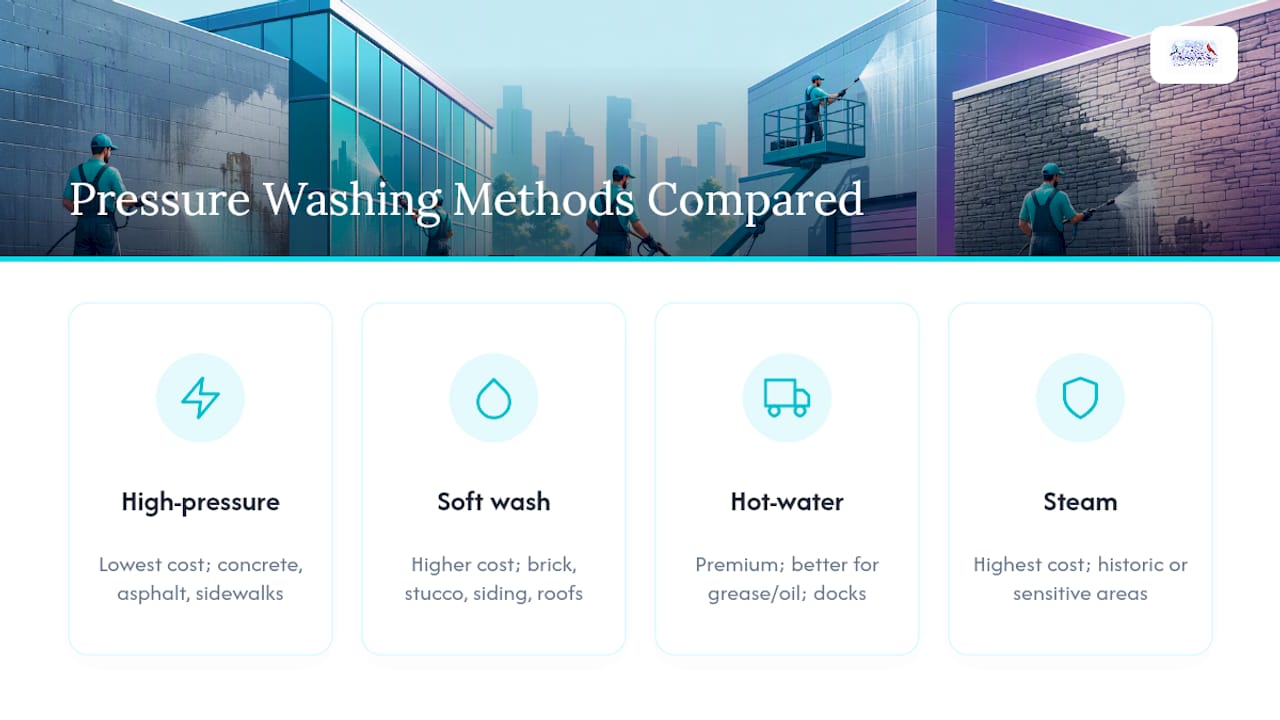
Hot water pressure washing, less common but increasingly available, cuts through grease and oil faster than cold water alone, which matters for loading docks and dumpster areas. It typically carries a premium over standard cold-water jobs because of the added equipment, but it can reduce total labor hours on heavily soiled surfaces enough to offset that premium.
Steam cleaning sits at the high end and gets reserved for delicate applications like historic facades or sensitive equipment areas, where standard pressure washing simply isn’t an option regardless of price.
How Long Does a Commercial Pressure Washing Job Take?
Timelines scale with square footage and complexity more than with price. A single storefront or small sidewalk section often wraps up in one to two hours, including setup and teardown. A 10,000-square-foot parking lot with moderate staining typically takes a two-person crew a half day to a full day.
Larger jobs, like full shopping center common areas or multi-story building exteriors, can stretch across two to five days, especially when lifts need repositioning or sections require multiple passes for heavy staining. Weather plays a role too. Wet conditions delay work, and some soft-wash chemical treatments need dry time before rinsing.
Scheduling around business hours adds its own timeline pressure. Retail centers and restaurants often push commercial crews into early morning or overnight windows to avoid disrupting customers, which can extend a one-day job into a multi-night project even though the total labor hours stay the same. Building that into your planning matters more for tenant-facing properties than for warehouses or industrial sites with more scheduling flexibility.
What Are You Actually Paying For?
Every quote breaks down into four cost buckets, even when the invoice just shows one lump number.
Labor usually makes up the largest share, driven by crew size, hours on site, and regional wage rates tracked by sources like the Bureau of Labor Statistics. Equipment covers pressure washer rental or ownership costs, lifts or scaffolding for elevated work, and specialty attachments for surface cleaning or graffiti removal. Materials include degreasers, algaecides, soft-wash detergents, and in some cases surface sealants applied after cleaning.
Disposal and containment round out the list, and this is the bucket homeowners rarely think about but commercial clients can’t skip. Wastewater containing chemicals, oil, or heavy sediment often can’t just run into a storm drain under Clean Water Act rules, so contractors budget for containment mats, vacuum recovery systems, or licensed disposal. Skipping this step isn’t cheaper, it’s a liability.
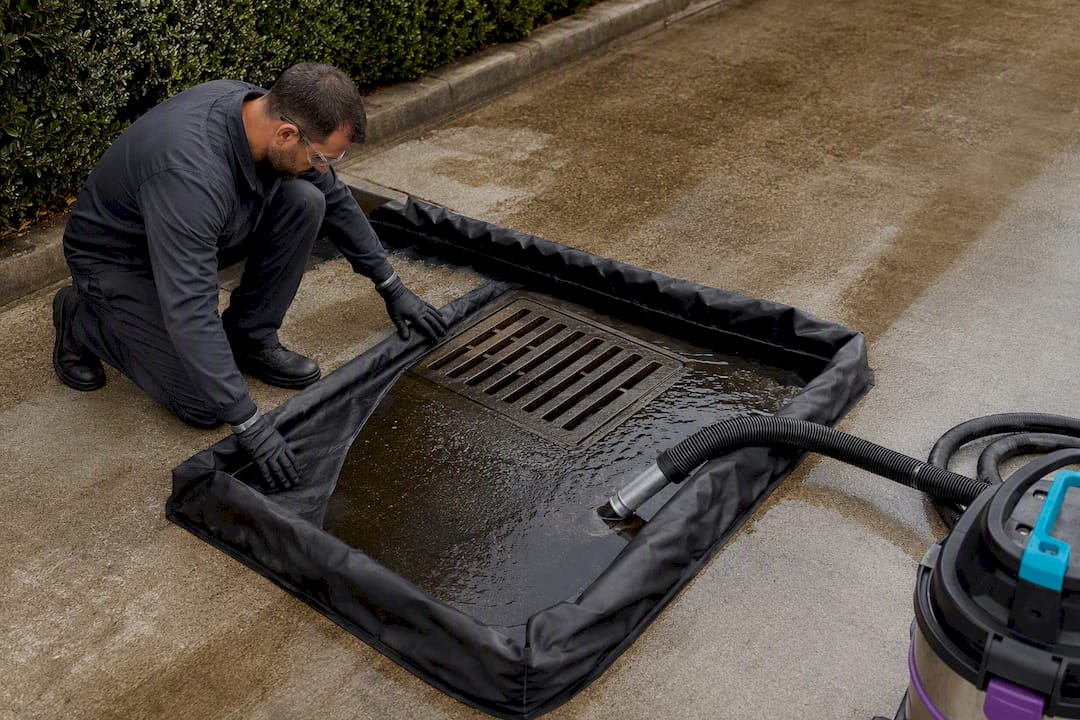
Example cost breakdowns from national data show these four categories shifting proportionally with job size, but disposal and containment tend to grow fastest on properties near storm drains or waterways.
What Do Different Business Types Typically Pay?
Business type shapes cost less through square footage alone and more through how soiled and complex the site tends to get.
Small retail storefronts and standalone restaurants usually land at the lower end, often $200 to $800 per visit, since the footprint is compact and access is simple. Strip malls and multi-tenant retail centers climb into the $1,500 to $6,000 range per visit depending on how many dumpster pads, loading docks, and parking areas are included in scope.
Office parks and mid-rise buildings often run $2,000 to $10,000 depending on exterior material and height, since soft-wash requirements and lift rental push costs up even when square footage is moderate. Large shopping centers, industrial sites, and multi-building campuses regularly exceed $10,000 per full service cycle, particularly when grease traps, loading zones, and extended parking areas all need attention in one visit.
Restaurants deserve a specific mention. Grease buildup around dumpster corrals and kitchen exhaust vents often pushes per-square-foot costs on those specific zones well above general flatwork rates, even though the restaurant’s overall footprint might be small.
Stop Budgeting Off Rate Cards, Start Budgeting Off Reality
Most articles on this topic hand you a per-square-foot number and call it done. That number is useful for a ballpark, but it quietly assumes average soil levels, easy access, and no containment needs, and commercial properties rarely hit all three at once. The real skill in budgeting for pressure washing isn’t memorizing a rate, it’s learning to spot which of your property’s quirks will push you toward the high end of any range you read online.
If there’s one thing conventional advice underweights, it’s the on-site survey. A quote given over the phone or from a satellite photo is a guess dressed up as a number. Facility managers who insist on a walk-through before accepting a bid consistently get more accurate numbers and fewer surprise change orders mid-job.
Prioritize this first: lock in what’s included in writing, specifically containment, insurance limits, and scope exclusions, before you compare price at all. A cheap bid missing those items isn’t actually cheaper once the change orders start.
— Richard
Get an Accurate Commercial Pressure Washing Quote
Rate cards and per-square-foot ranges get you in the right neighborhood, but they can’t account for your dumpster corral’s grease buildup or the loading dock nobody mentioned until the crew showed up. E and R Cleaning Solutions builds every commercial estimate around an actual site visit, not a guess, so the number you get is the number you pay.
A commercial quote from E and R Cleaning Solutions spells out scope, exclusions, disposal handling, and insurance coverage before any work starts, and you can choose one-time service or a recurring contract, quarterly or monthly, that typically lowers your per-visit rate while keeping your property looking sharp between cleanings. Facility managers juggling multiple sites tend to find the monthly option pays for itself in reduced heavy-soil remediation alone. If you’re ready to see what your property actually costs to maintain, request a walk-through and get a commercial pressure washing quote built around your site, not a national average.
Sources
- Commercial Pressure Washing Rates by Property Type | SurfaceMeasure
- Pressure Washing Pricing Guide: 2026 Rates & Pricing Tips | Housecall Pro
- How Much Does Commercial Pressure Washing Cost? — RBM Building Services
- Summary of the Clean Water Act | EPA