Why Parking Lot Cleaning Matters for Tenants and Your Bottom Line
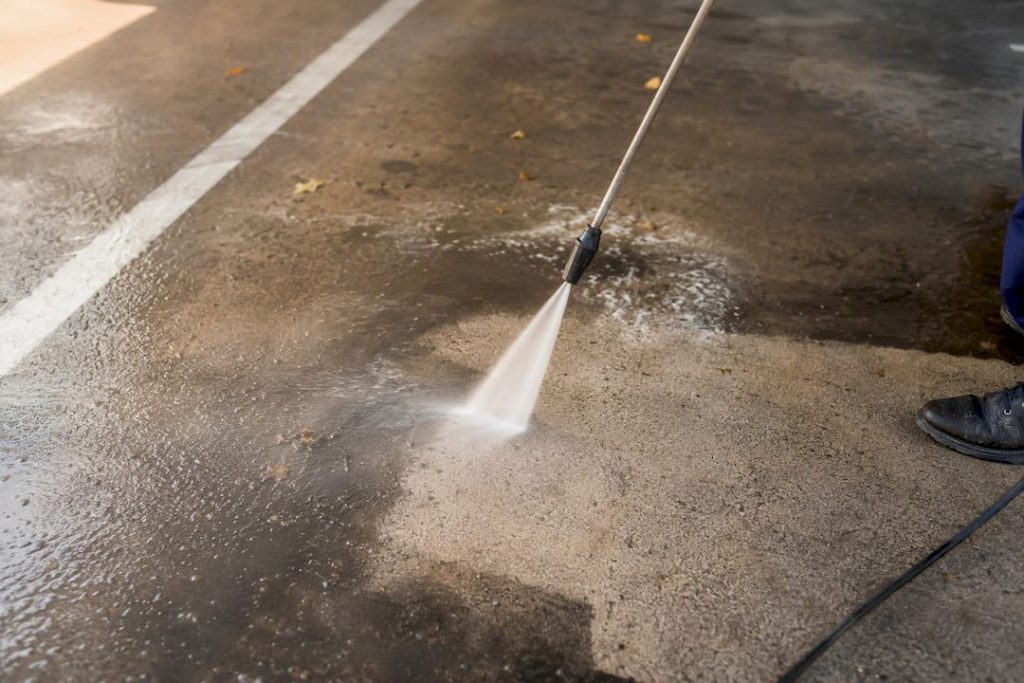
Regular parking lot cleaning matters for tenants because it directly cuts slip-and-fall risk, keeps a property’s first impression intact, and protects the pavement asset itself from premature failure. Skip it, and you’re not just risking a dirty lot. You’re risking lease renewals. The immediate action for property managers: add scheduled sweeping to your baseline operations, log every visit with timestamps and photos, and inspect drain inlets before the next storm.
- Schedule sweeping as a recurring line item, not an occasional response to complaints
- Document every cleaning visit for insurance and owner reporting
- Check catch basins and drain inlets monthly, more often near heavy tree canopy
A single untreated crack has roughly a 75% chance of becoming a pothole within three years. That’s the cost of “we’ll get to it later.”
Key Takeaways
Regular parking lot cleaning reduces tenant safety risk, protects pavement from premature failure, and directly influences lease renewal decisions.
| Point | Details |
|---|---|
| Untreated cracks escalate fast | A single crack has roughly a 75% chance of becoming a pothole within three years without sealing. |
| Match cleaning cadence to property type | Retail lots need weekly sweeping; industrial lots can often run on a monthly cycle. |
| Documentation protects you legally | Keep dated service logs, before-and-after photos, and repair orders for insurance and compliance defense. |
| Lot condition drives tenant turnover | Analysis of tenant-exit conversations shows lot complaints often surface before non-renewal decisions. |
| E and R Cleaning Solutions handles turnover cleaning | Their pressure washing between tenancies service documents results with before-and-after photos for owner reporting. |
Table of Contents
- How Clean Parking Lots Affect Safety, Tenant Satisfaction, and Property Value
- What Problems Should You Look for During a Lot Walkthrough?
- What Does Regular Parking Lot Cleaning Actually Include?
- How Often Should You Clean and Inspect a Parking Lot?
- How Do Seasons Change Your Parking Lot Maintenance Plan?
- What Compliance and Risk Steps Should Property Managers Take?
- Should You Hire a Contractor or Handle Cleaning In-House?
- What Should You Budget for Parking Lot Cleaning?
- How E and R Cleaning Solutions Helps Property Managers Stay Ahead of Lot Problems
- Sources
How Clean Parking Lots Affect Safety, Tenant Satisfaction, and Property Value
Tenants and their customers cross your parking lot before they see anything else about the property. A cracked, stained, debris-covered lot reads as neglect, and neglect reads as risk, even to someone who’s never heard the term “deferred maintenance.” That first impression compounds daily, because tenants walk it every morning and every night.
Safety is where the stakes get concrete. Loose gravel, oil sheens, and potholes cause slips, trips, and vehicle damage, all of which generate complaints, insurance claims, and sometimes lawsuits. Poor lighting combined with a cluttered lot also raises legitimate security concerns for tenants working late.

There’s a slower cost too. Dust, oil, and organic debris accelerate surface deterioration, and pavement decay itself is driven mainly by water infiltration, oxidation, and traffic load. Regular cleaning interrupts that cycle before it turns into structural repair.
Pro Tip: Inspect the lot right after the first hard rain of a season. Water pooling reveals drainage failures that are invisible on a dry day and cheap to fix before they undermine the base layer.
- Debris left in place clogs drains and speeds up base failure
- Oil and chemical residue breaks down sealcoat faster than normal wear
- A well-lit, swept lot reduces both liability exposure and tenant anxiety
What Problems Should You Look for During a Lot Walkthrough?
A five-minute walkthrough catches most of what turns into a tenant complaint later. Build these into your standard inspection form:
- Debris and litter near entrances and dumpster corrals, which signals neglect fastest to visitors
- Oil stains on parking spaces, usually requiring degreasing and power washing before they set permanently
- Clogged or slow drains, a direct path to standing water and mosquito complaints
- Faded striping, which creates confusion, accessibility violations, and fender-bender liability
- Potholes and alligator cracking, both signs that a contractor repair is overdue, not optional
- Standing water after rain, pointing to grading or drainage problems beneath the surface
- Dim or broken lighting, a security issue as much as a maintenance one
- Overflowing dumpster areas, which attract pests and generate the most tenant complaints per square foot
Each item maps to a specific fix: sweeping handles debris, power washing handles stains, and contractor work handles cracks, potholes, and striping. Flag anything structural immediately rather than waiting for the next scheduled service.
What Does Regular Parking Lot Cleaning Actually Include?
A recurring program covers more ground than most managers assume when they first write a service contract. The core tasks:
- Sweeping to remove loose debris before it clogs drains or scratches into the surface under traffic
- Power washing for oil stains, gum, and general grime buildup on high-traffic areas
- Stain and oil removal, often requiring a degreaser pass before pressure washing
- Trash and debris removal, especially near entrances, dumpsters, and landscaped islands
- Catch-basin and drain clearing to keep stormwater moving instead of pooling
- Striping maintenance for both compliance and visible order
- Minor spot repairs, like sealing small cracks before they widen
Sweeping does more than tidy up. It functions as a low-cost monitoring visit, giving crews a regular chance to spot a new crack or a failing drain before it becomes a bigger repair.
Before-and-after photos matter here beyond marketing appeal. They give property owners a documented record of what changed and when, which becomes useful during insurance reviews or lease negotiations. A pressure washing routine between tenancies is a natural point to capture that documentation.
How Often Should You Clean and Inspect a Parking Lot?
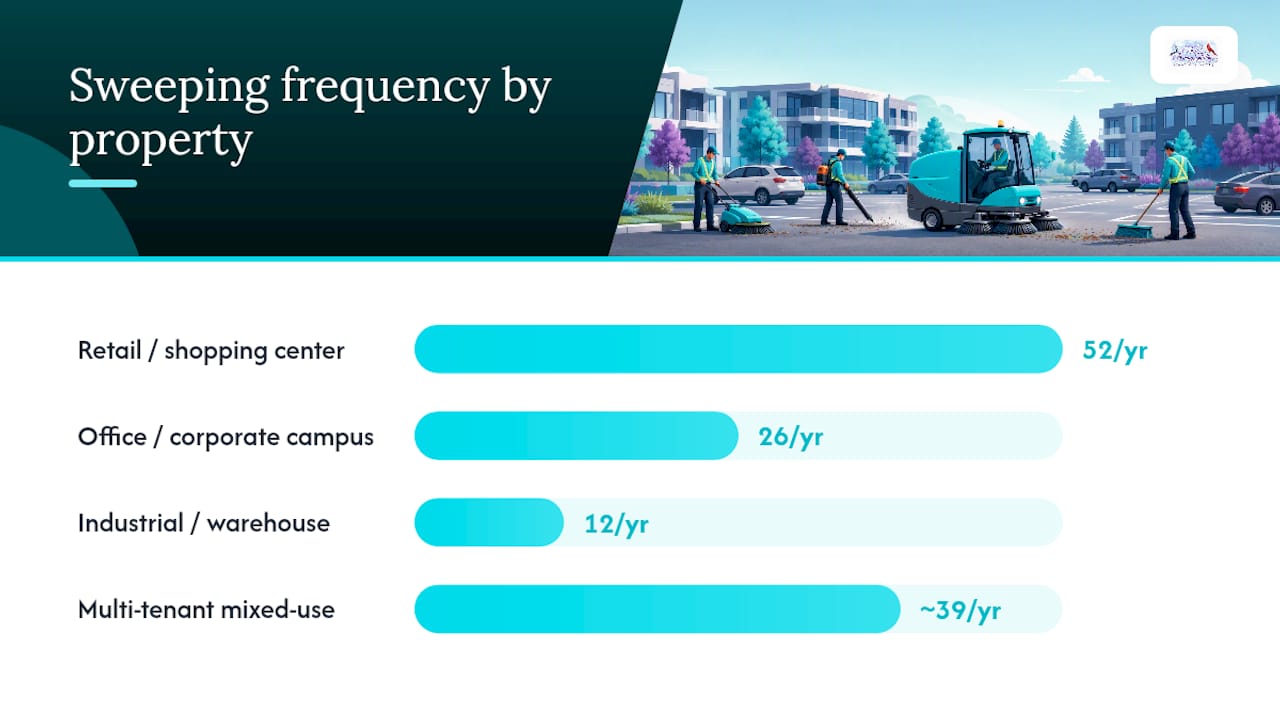
Frequency depends on property type, traffic volume, tree canopy, and local climate more than any fixed calendar. A retail lot with heavy daily turnover needs a different rhythm than a low-traffic office park.
| Property type | Minimum sweeping cadence | Suggested power-wash cadence |
|---|---|---|
| Retail / shopping center | Weekly | Quarterly |
| Office / corporate campus | Biweekly | Twice yearly |
| Industrial / warehouse | Monthly | Annually |
| Multi-tenant mixed-use | Weekly to biweekly | Quarterly |
Increase sweeping frequency near heavy tree cover, active nearby construction, or during high-pollen seasons. Inspection cadence should follow a similar layered approach: quick daily visual checks, deeper quarterly reviews, and one full annual evaluation, a pattern echoed in industry maintenance checklists.
How Do Seasons Change Your Parking Lot Maintenance Plan?
Weather drives most of the variation in a lot’s needs, and reacting to conditions works better than sticking to a rigid date on the calendar.
- Spring: sweep pollen and seed debris before it clogs drains and stains fresh striping
- Fall: clear leaf drop aggressively, since wet leaves clog inlets fast and stain concrete
- Post-storm: schedule a debris cleanup within a day or two of any major storm, not at the next routine visit
- Winter: remove salt and sand residue promptly, since it accelerates concrete spalling if left to sit
- Summer: watch for fresh oil stains from increased traffic and heat-softened asphalt
Coordinate with your landscaping and snow-removal contractors so piled snow or grass clippings don’t end up blocking a drain inlet. A quick call before their scheduled visit usually solves it.
What Compliance and Risk Steps Should Property Managers Take?
Routine cleaning isn’t just cosmetic. It’s part of your legal defense file. Documented inspections and cleaning logs give you a paper trail if a slip-and-fall claim or a stormwater compliance question ever comes up.
Keep these records on hand:
- Dated service logs for every sweep, wash, and repair
- Before-and-after photos tied to each service date
- Repair orders and invoices for contractor work
- Drain-clearing receipts, especially before and after major storms
ADA compliance also depends partly on visible cleanliness. Faded striping on accessible aisles or blocked curb ramps can trigger complaints even when the underlying infrastructure meets code.
Ask any contractor for proof of general liability insurance and any required environmental disposal certificates before they touch your lot. It’s the single easiest way to avoid inheriting someone else’s liability.
Should You Hire a Contractor or Handle Cleaning In-House?
Routine sweeping and litter pickup often work fine as an in-house task if you have the staff and equipment. Power washing, sealcoating, and structural repairs almost always call for a professional, both for equipment reasons and for liability around chemical disposal.
Screen any contractor with these steps:
- Confirm current liability insurance and workers’ compensation coverage
- Ask about equipment, particularly pressure washing PSI and GPM ratings for the surface type
- Request local references from similar commercial properties
- Ask how they handle wastewater and chemical runoff disposal
- Confirm they document jobs with before-and-after photos
Red flags to walk away from:
- No proof of insurance on request
- No documented safety or disposal program
- Vague answers about equipment or experience with commercial lots
What Should You Budget for Parking Lot Cleaning?
Costs shift based on lot size, service frequency, stain severity, local disposal regulations, and climate. A gravel-and-oil-stained lot in a rainy climate costs more to maintain than a small, well-drained lot in a dry region.
Typical line items to budget for:
- Monthly or biweekly sweeping service
- Seasonal power washing, usually quarterly for high-traffic properties
- Annual sealcoating on a rotating schedule
- Periodic striping refresh
- Ad hoc storm cleanup and drain clearing
Run the math against the alternative. Proactive maintenance extends pavement life significantly compared to reactive repair, and a full resurfacing project costs far more than years of recurring cleaning. Compare that to a single vacancy: one lost tenant, given the time and cost of re-leasing, usually dwarfs an entire year of cleaning invoices.
A Quick Case Study: Cleaning Between Tenancies
A commercial property preparing for a new tenant had a lot marked by oil stains, faded lines, and grime buildup from a prior auto-service tenant. Targeted pressure washing and stain removal cleared the space ahead of showings, and the property leased faster than the owner’s prior turnover.
Before-and-after photos from the job showed a visibly restored surface, exactly the kind of proof owners want before signing off on a turnover budget.
- Targeted pressure washing addressed stains standard sweeping couldn’t touch
- Documentation gave the property manager a clean record for the owner’s file
A Note From Richard at E and R Cleaning Solutions
Every tenant complaint about a parking lot traces back to something a scheduled visit would have caught early. Our crews treat every lot like it’s about to be shown to a prospective tenant, because it usually is.
How E and R Cleaning Solutions Helps Property Managers Stay Ahead of Lot Problems
E and R Cleaning Solutions handles the tasks that keep a commercial lot from becoming a tenant complaint: pressure washing for oil stains and grime, surface stain removal, coordination around scheduled sweeping, and seasonal cleanups timed to storms and leaf drop. For turnover situations specifically, our pressure washing between tenancies service is built to get a lot show-ready fast, without the guesswork of scheduling multiple vendors.

Our team carries proper insurance, and we document every job with before-and-after photos so you have a record for owner reporting or lease-renewal conversations. If you’re managing a property with recurring lot issues or an upcoming tenant turnover, request a quote through our commercial property cleaning services page and get a schedule built around your property’s actual traffic and season, not a generic template.
Sources
- A Practical Guide to Parking Lot Maintenance – Facility Management Insights
- Parking Lot Maintenance Checklist (2026) | TruTec Blog