Dumpster Pad Cleaning Explained for Commercial Properties
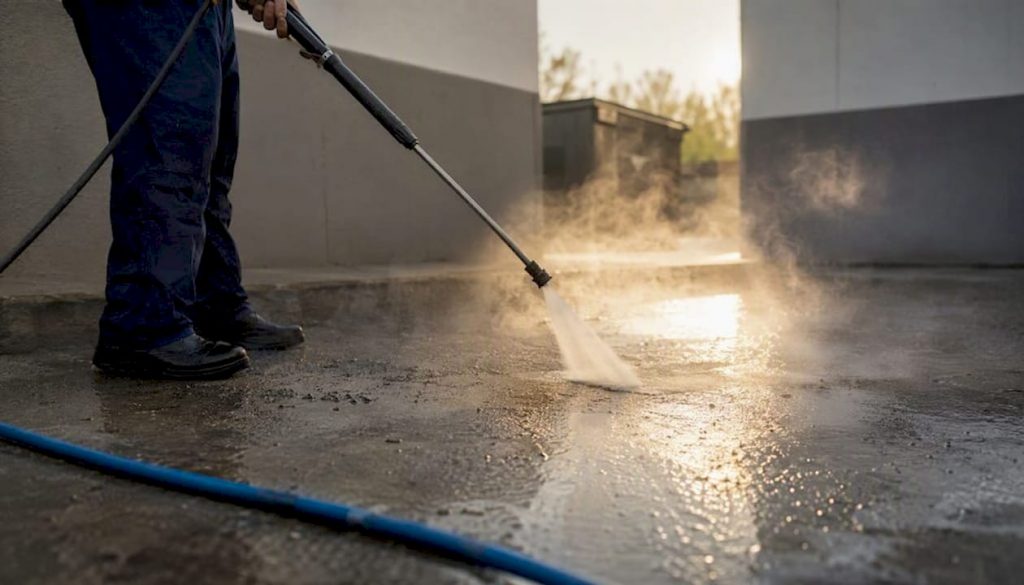
Dumpster pad cleaning is the professional pressure washing and degreasing of the concrete slab beneath and around your commercial dumpsters, and it directly reduces odor, pest activity, slip hazards, and regulatory exposure on your property. Here is what a standard professional service covers at a glance:
- Industrial degreaser application and pre-soak
- Hot-water pressure washing of the pad surface and enclosure walls
- Storm drain protection and wastewater recovery
- Sanitizer and deodorizer application
- Before/after photo documentation
Hire a pro now if: your property is a restaurant or food-service site, you have visible grease stains or persistent odors, you have noticed rodents or roaches near the waste area, or your drains are slow or backing up.
Table of Contents
- What is a dumpster pad, and what does cleaning it actually cover?
- Why dumpster pad maintenance matters more than most owners realize
- How does the professional dumpster pad cleaning process work?
- What equipment and cleaning agents do professionals use?
- How often should you clean your dumpster pad?
- What drives the cost of a dumpster pad cleaning quote?
- U.S. environmental rules and wastewater management you need to know
- DIY vs. professional: when does it make sense to do it yourself?
- How E and R Cleaning Solutions approaches a commercial dumpster pad job
- Key Takeaways
- The thing most property owners get wrong about dumpster pad cleaning
- Get a custom quote for your commercial property
- Useful sources
What is a dumpster pad, and what does cleaning it actually cover?
A dumpster pad is the reinforced concrete slab that supports your dumpsters and, in many cases, the truck access area used during hauler pickups. It takes the full weight of loaded containers and the repeated stress of truck wheels, which is why it is almost always poured thicker than standard sidewalk concrete.
Cleaning the pad covers the surface itself plus the enclosure walls, any bollards or gates, and the trench or floor drains inside the enclosure. A complete service typically includes debris removal, degreaser application, hot-water pressure washing, drain clearing, odor treatment, and written documentation of the work. Some providers also rinse and treat the enclosure walls and gates as part of a full sanitation reset.
What cleaning does not cover: structural concrete repairs, dumpster repairs or replacement, internal dumpster cleaning (a separate service), underground grease trap servicing, or waste hauling. If a quote bundles those in without itemizing them, ask for a line-item breakdown before signing.
Why dumpster pad maintenance matters more than most owners realize
The concrete under a dumpster collects grease, food waste, and organic runoff every time a bag breaks or a container overflows. Left alone, that buildup becomes a health and liability problem faster than most owners expect.
Health and safety. Grease-saturated concrete is genuinely slippery, and a slip-and-fall near a waste area is a documented liability exposure. Beyond the slip risk, decomposing organic material harbors pathogens that can migrate to adjacent areas, especially in warm weather.
Pest and odor control. Rodents, roaches, and flies are not attracted to the dumpster itself so much as the food residue on the pad around it. Removing that residue cuts off the food source. Odor follows the same logic: the smell coming from a waste enclosure is almost always the pad, not the sealed container.
Regulatory and inspection risk. Food-service properties are the most exposed here. A health inspector who walks the exterior of a restaurant and finds a grease-saturated pad with standing water can issue a citation even if the kitchen passes. A clean, documented pad is a simple piece of due diligence that costs far less than a re-inspection fee or a failed audit.
Curb appeal and tenant perception. A dirty waste enclosure is one of the first things a prospective tenant or customer notices, and it signals how the rest of the property is managed. For multi-tenant commercial buildings, that perception affects lease renewals.
How does the professional dumpster pad cleaning process work?
A well-run job follows a consistent sequence. Here is what to expect when a qualified crew arrives on site:
- Initial assessment. The crew inspects the pad, enclosure walls, and drains, notes grease concentration and stain depth, and confirms the dumpsters are empty. Coordinate with your waste hauler so containers are pulled before the appointment.
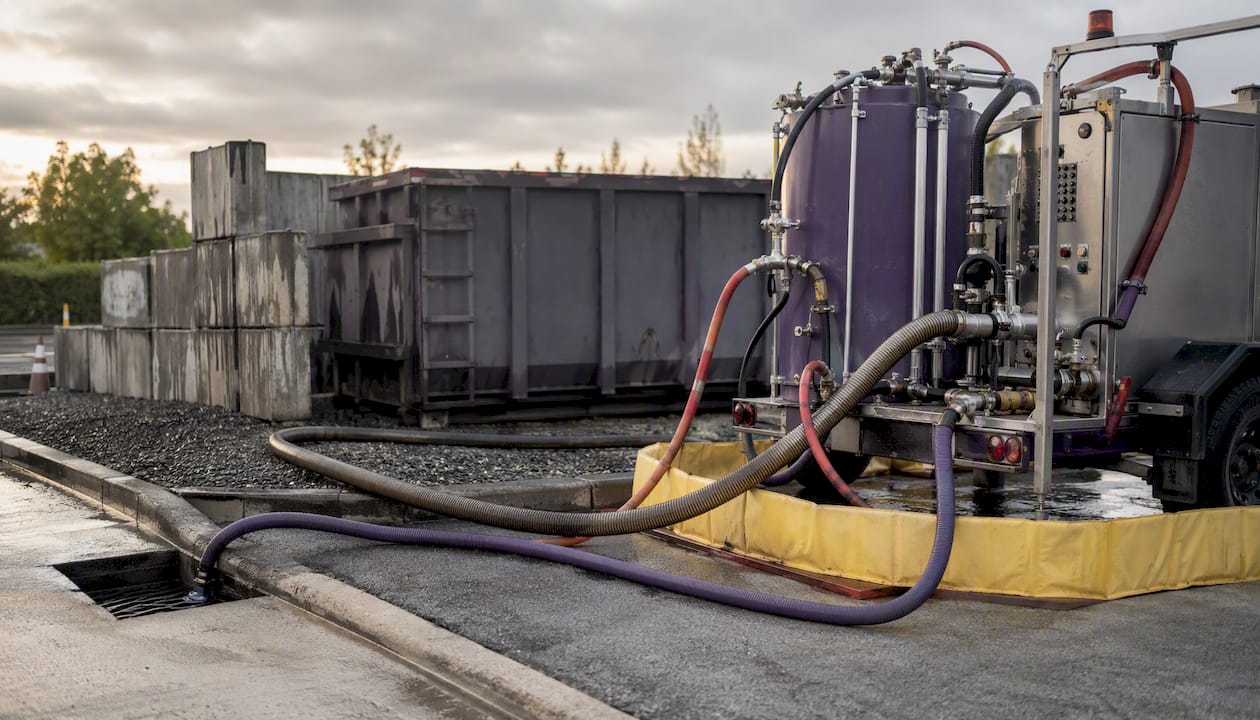
- Pre-clean prep. Loose debris is removed by hand or blower. Containment barriers are set up around storm drains and the perimeter to capture wash water before it can run off.
- Degreaser application. An industrial powdered or liquid degreaser is applied to the pad surface and allowed to dwell. For heavy kitchen grease, powdered degreasers mixed in a carboy are a common trade practice because they dissolve more completely and react with hot water to break down stubborn grease faster.
- Hot-water pressure washing. The crew runs a hot-water machine across the pad, typically at a high pressure appropriate for stain depth and concrete condition. Stubborn areas get a second pass. Nozzle selection matters here: the wrong tip at high PSI can etch or pit concrete.
- Drain and interceptor work. Trench drains and floor drains inside the enclosure are cleared of debris, and the captured wash water is routed to the recovery system rather than the storm drain.
- Sanitizing and deodorizing. After the rinse, a sanitizer is applied to the clean surface, followed by an odor neutralizer. This step is what separates a pressure wash from a true sanitation service.
- Final inspection and documentation. The crew photographs the finished pad, notes any concrete damage or drain issues that need attention, and records the recommended follow-up frequency. That documentation is your proof of work for insurance or inspection purposes.
Pro Tip: Schedule the cleaning immediately after a hauler pickup, not before. An empty pad with empty dumpsters gives the crew full access and prevents re-contamination from dripping containers during the job.
What equipment and cleaning agents do professionals use?
The price gap between a professional service and a DIY attempt comes down almost entirely to equipment. A consumer-grade cold-water pressure washer cannot dissolve commercial kitchen grease, and a garden-hose degreaser will not hold up to a heavily contaminated pad.
Hot-water machines and dual-lance assemblies
Hot-water power washers are the core tool. Heat breaks down grease at a molecular level in a way cold water simply cannot replicate. Dual-lance assemblies let a technician switch between chemical injection and rinsing without stopping to change equipment, which cuts job time and reduces the risk of over-applying chemicals to one area. Non-marking hoses, such as grey KobraJet-style hoses, prevent scuff marks on light-colored concrete. Nozzle selection follows the surface: a wider fan angle for general washing, a tighter tip for stubborn staining, and a surface cleaner attachment for flat concrete where consistent coverage matters.
Cleaning agents
Powdered degreasers designed for kitchen grease are the industry standard for heavy-contamination pads. They are mixed on site in a resistant container (a carboy is common), and the concentration is adjusted based on how bad the buildup is. Odor neutralizers and quaternary ammonium sanitizers round out the chemical kit for the final treatment step.
Containment and wastewater recovery
Waste recovery systems capture the wash water before it can reach a storm drain. These range from portable vacuum recovery units to filter bags and water reclamation tanks. Some programs filter and recycle the recovered water, which reduces disposal costs and supports a more sustainable operation. Any contractor who does not mention containment in their quote is a red flag.
PPE and surface protection
Crews working with concentrated degreasers and hot-water equipment wear chemical-resistant gloves, eye protection, and non-slip boots. Landscaping and adjacent surfaces are protected with tarps or barriers before chemical application begins.
How often should you clean your dumpster pad?
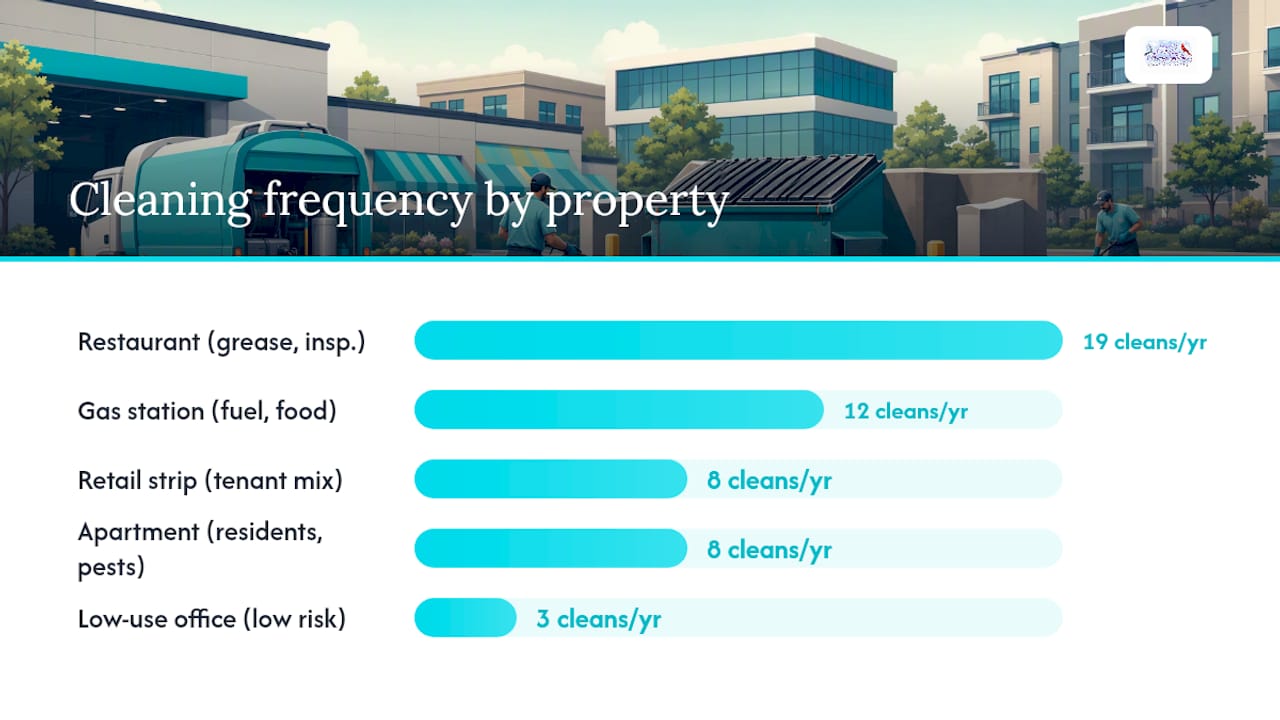
Frequency depends on what your property generates and how fast organic material accumulates. Climate matters too: in warm regions, heat accelerates decomposition and odor, so the same property that needs monthly service in a northern state may need biweekly service in a southern one.
| Property type | Recommended frequency | Key risk factors |
|---|---|---|
| Restaurant / food service | Biweekly to monthly | High grease output, health inspections, odor |
| Gas station / convenience store | Monthly | Fuel residue, food waste, high foot traffic |
| Retail strip center | Monthly to quarterly | Moderate waste, tenant mix, seasonal spikes |
| Apartment complex | Monthly to quarterly | Volume of residents, warm climate, pest pressure |
| Low-use office or light commercial | Quarterly to biannual | Minimal organic waste, low contamination risk |
Between professional visits, watch for these signals that your schedule needs to move up: visible grease spreading beyond the pad edge, persistent odor after a hauler pickup, any pest sighting near the enclosure, or slow-draining floor drains. A simple monthly walk-through of the waste area takes two minutes and can catch a problem before it becomes a citation.
What drives the cost of a dumpster pad cleaning quote?
No two pads are priced the same, and understanding the line items helps you compare bids fairly.
Square footage and access. A small single-dumpster pad costs less than a large multi-container enclosure with truck access lanes. Tight enclosures that limit equipment movement add labor time.
Grease concentration. Light staining from a retail tenant cleans faster than a decade of restaurant grease. Heavy contamination requires longer dwell times, stronger chemical concentrations, and multiple passes, all of which add cost.
Hot water and recovery systems. A contractor running a hot-water machine with a full wastewater recovery setup has higher equipment overhead than one using cold water and no containment. That overhead is worth paying for, both for results and for compliance reasons.
Drain work. If trench drains need clearing or a drain interceptor needs servicing, that is typically a separate line item.
Frequency discounts. Most providers offer lower per-visit pricing on recurring contracts versus one-time cleanings. If your property needs monthly service, ask for a quarterly or annual rate.
When comparing quotes, ask every contractor: How do you handle wastewater? Do you use hot water? What is your PSI range? Do you photograph the work? A contractor who cannot answer those questions clearly is not worth the savings.
U.S. environmental rules and wastewater management you need to know
Washing a dumpster pad without containment is not just sloppy work. Under the Clean Water Act and most state and local stormwater regulations, discharging untreated wash water to a storm drain is a violation that can result in fines for the property owner, not just the contractor.
The contaminated water from a dumpster pad wash contains grease, detergents, and organic material. Storm drains in most U.S. municipalities flow directly to waterways without treatment. That is why proper containment is a legal requirement in most jurisdictions, not a premium add-on.
Qualified contractors use portable recovery systems, filter bags, and water reclamation units to capture all wash water and dispose of it through an approved channel, typically a sanitary sewer connection or a licensed disposal facility. For more on how water reclamation works in commercial cleaning, the process involves filtration, settling, and sometimes pH adjustment before disposal.
Before hiring any contractor, ask:
- Do you use a containment and recovery system on every job?
- Where does the recovered water go, and do you have documentation?
- Are you permitted or insured for wastewater handling in this municipality?
- Will you include a written waste-handling statement in the service report?
Request photos of the containment setup as part of your service documentation. If a contractor balks at that request, find another one. Understanding building code compliance as it relates to exterior cleaning helps property owners ask the right questions before a job starts.
DIY vs. professional: when does it make sense to do it yourself?
DIY dumpster pad cleaning is feasible in a narrow set of circumstances: a small pad, light soil with no visible grease, no complicated drains, and access to a consumer-grade hot-water pressure washer. If your waste area looks more like a lightly used office building than a restaurant, a quarterly DIY wash with a good degreaser and a 1,500–2,000 PSI machine can maintain it between professional visits.
Outside that scenario, the risks outweigh the savings.
- Environmental discharge. Without a recovery system, wash water runs to the storm drain. That is a potential Clean Water Act violation, and the property owner is liable.
- Inadequate degreasing. Consumer degreasers are not formulated for commercial kitchen grease. You may move the contamination around without actually removing it.
- Concrete damage. The wrong PSI or nozzle angle on older or thinner concrete can etch the surface, creating more surface area for future contamination to grip.
- Safety. Concentrated degreasers require proper PPE. Hot-water equipment at commercial PSI levels can cause serious injury without training.
If you proceed with DIY, follow this checklist:
- Wear chemical-resistant gloves, eye protection, and non-slip footwear
- Pre-test the degreaser on a small, inconspicuous area before full application
- Use a degreaser rated for commercial grease, not a household product
- Block the storm drain with a drain plug or absorbent barrier before washing
- Collect and dispose of wash water through a sanitary drain, not the storm drain
- Photograph the pad before and after, and keep a simple log of the date and products used
How E and R Cleaning Solutions approaches a commercial dumpster pad job
Consider a typical scenario: a strip mall restaurant tenant has complained about odors near the shared waste enclosure, and the property manager has noticed grease spreading beyond the pad edge toward the parking lot. The pad has not been professionally cleaned in over a year.
E and R Cleaning Solutions starts with a site inspection before quoting. The crew walks the enclosure, checks the drain condition, notes the grease spread, and confirms the dumpster schedule with the property manager so the job is timed right after a hauler pickup. The quote comes back as a line-item estimate: debris removal, containment setup, degreaser application, hot-water pressure wash, drain clearing, deodorizer treatment, and photo documentation.
On the day of service, containment barriers go up around the storm drain before any water touches the pad. The degreaser dwells for the appropriate time based on grease concentration, then the hot-water machine runs across the full pad and enclosure walls. The drain is cleared and the wash water is recovered, not discharged. After the sanitizer and deodorizer are applied, the crew photographs the finished pad from the same angles as the before shots.
The property manager receives a service report with before/after photos, notes on a small concrete crack near the drain that should be monitored, and a recommendation for monthly service given the restaurant tenant’s output. That documentation goes into the property file for the next inspection or insurance review.
Key Takeaways
Dumpster pad cleaning is a compliance-critical maintenance task that protects commercial properties from pest activity, odor complaints, slip liability, and regulatory citations when done correctly with hot water, industrial degreasers, and proper wastewater containment.
| Point | Details |
|---|---|
| Hire a pro for food-service sites | Restaurants and food-adjacent tenants generate grease that consumer equipment cannot fully remove. |
| Wastewater containment is non-negotiable | Discharging untreated wash water to storm drains can violate the Clean Water Act and expose the property owner to fines. |
| Frequency by property type | Food service: biweekly to monthly; retail and apartments: monthly to quarterly; low-use sites: quarterly to biannual. |
| Require documentation on every job | Before/after photos and a written waste-handling statement protect you during inspections and insurance reviews. |
| E and R Cleaning Solutions | Provides line-item quotes, hot-water pressure washing, containment, and photo documentation for commercial pad cleaning. |
The thing most property owners get wrong about dumpster pad cleaning
Most owners treat dumpster pad cleaning as a cosmetic task, something to schedule when the smell gets bad enough to draw a complaint. That framing is the problem. By the time the odor is noticeable from the parking lot, the pad has been building up contamination for months, the drain is probably partially blocked, and there is a reasonable chance pests have already found the food source.
The properties that handle this well treat the waste enclosure the same way they treat HVAC filters: on a calendar, not on a complaint. A restaurant pad cleaned monthly costs a fraction of what a heavy-grease remediation job costs after a year of neglect, and it never reaches the point where a health inspector is writing notes.
The other thing worth saying plainly: wastewater containment is not a premium service feature. Any contractor who does not include it as a standard practice is either cutting corners on your property or exposing you to a compliance risk you probably do not know you are carrying. Ask about it before you book, not after.
Get a custom quote for your commercial property
E and R Cleaning Solutions handles commercial dumpster pad cleaning with honest, line-item pricing and flexible scheduling built around your hauler’s pickup calendar. Every job includes hot-water pressure washing, industrial degreasing, wastewater containment, and before/after photo documentation so you have a clean record for inspections and insurance.

If your property needs commercial exterior maintenance beyond the pad, including façade washing, parking areas, or pressure washing between tenancies, E and R Cleaning Solutions quotes those together so you are not coordinating multiple contractors. Contact us to schedule a site visit and get a custom quote for your property.
Useful sources
- What Lurks beneath a Dumpster…Dumpster Pad Cleaning with a Dual Lance – Cleaner Times
- Dumper Pad Cleaning Part 1 Basics | PowerWash.com
- Cleaner Times March 2026 (trade-magazine compilation) – issuu.com
- Mastering Dumpster Pad Cleaning | JiffyJunk.com
- Dumpster Pad Cleaning: Essential Tips for Maintenance and Hygiene – Southern Kitchen Services
For local stormwater permitting questions, contact your municipal environmental or public works office. Requirements vary by city and county, and your contractor should already know the rules for your jurisdiction.