Commercial Window Cleaning Process: A 2026 Guide for Property Managers
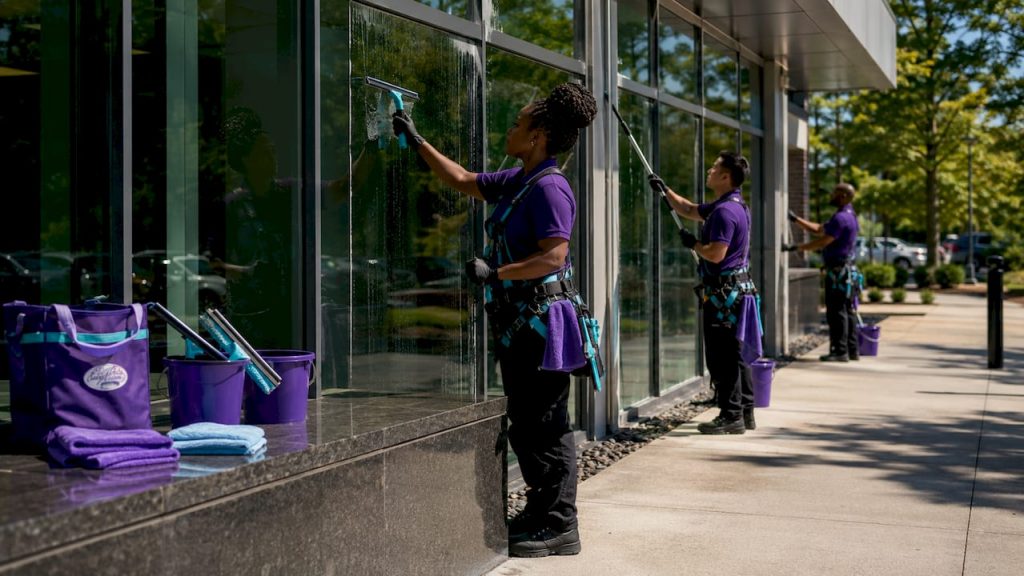
The commercial window cleaning process is a structured, multi-step procedure that professionals use to clean and maintain large-scale building windows safely and effectively. It covers everything from pre-cleaning safety checks to a final inspection in natural light, and it applies to buildings of every height. For business owners and property managers, understanding this process means you can set realistic expectations, verify contractor quality, and protect your building’s glass from premature wear. E and R Cleaning Solutions follows this same disciplined sequence on every job.
What are the standard steps in a commercial window cleaning process?
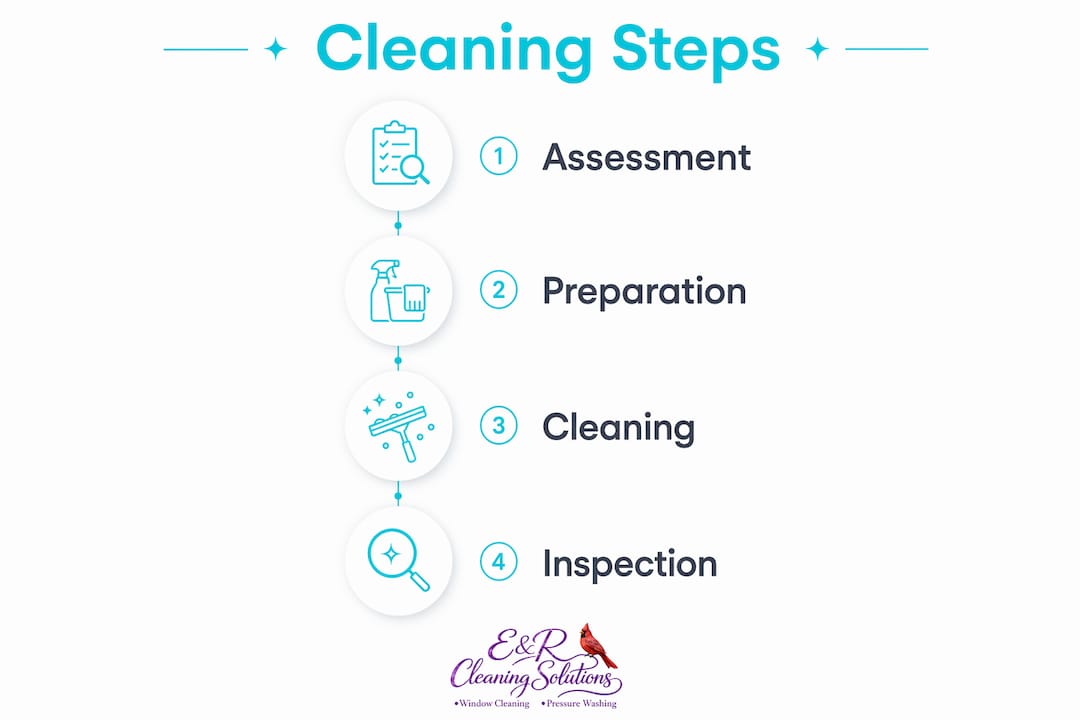
The window cleaning service process follows a disciplined sequence: pre-cleaning assessment, area preparation, cleaning with approved tools and detergents, and a final inspection in natural light. Skipping any step creates streaks, scratches, or safety risks. Each phase has a specific purpose, and professionals treat them as non-negotiable.
Step 1: Pre-cleaning assessment
The crew inspects the site before touching a single window. They check weather conditions, confirm anchor points for any elevated access, and identify the glass type. Coated or tinted glass requires different tools and solutions than standard float glass. This step prevents damage and sets the scope of work.
Step 2: Area preparation
Professionals place drop cloths on floors and sills to protect surfaces below. They clear the perimeter of furniture, signage, or equipment that could obstruct access or get wet. Loose dirt and debris are brushed or vacuumed from frames and sills before any liquid is applied. Dragging grit across glass causes scratches, so this dry prep step is critical.
Step 3: Cleaning
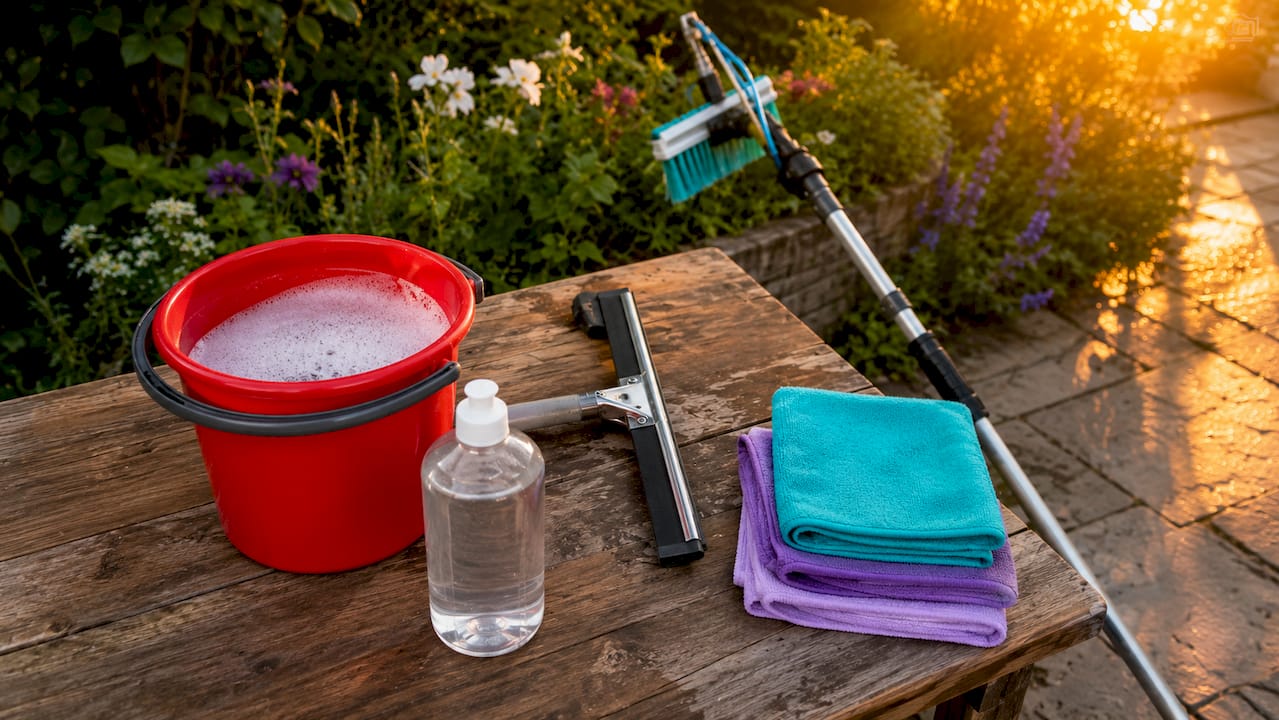
The actual cleaning phase uses pH-neutral detergents mixed at a ratio of 1 part soap to 10 parts water. Tough stains get a 2-minute dwell time before the crew works the solution. Tools include T-bar applicators to spread the solution and squeegees with fresh rubber blades to remove it. Water-fed pole systems deliver purified water directly to the glass on mid-height buildings, eliminating the need for a squeegee entirely.
Step 4: Final inspection
A thorough quality check involves holding each window up against natural light to catch missed spots, edge streaks, and polish inconsistencies. This is the step most budget services skip. It is also the step that separates a professional result from an average one.
Pro Tip: Schedule window cleaning for overcast days when possible. Direct sunlight dries cleaning solution too fast, leaving streaks before the squeegee reaches the bottom of the pane.
How do commercial window cleaning techniques vary by building height?
Building height is the single biggest factor in choosing a cleaning method. A three-story retail building and a twenty-story office tower require completely different equipment, certifications, and safety plans. The table below outlines how professional window cleaning methods map to building type.
| Building type | Primary method | Key equipment | Access consideration |
|---|---|---|---|
| Low-rise (1–3 stories) | Traditional pole and squeegee | Extension poles, T-bar, rubber blades | Ground-based, no special access needed |
| Mid-rise (4–8 stories) | Water-fed pole system | Purified water tank, carbon fiber poles | Requires stable ground anchor or platform |
| High-rise (9+ stories) | Rope access or boom lift | IRATA-certified harness systems, aerial lifts | Anchor point certification required |
Water-fed poles work well for mid-level buildings because purified water dries spot-free without a squeegee pass. That speeds up the job and reduces the risk of streaking on large glass panels. For high-rise work, rope access with IRATA certification is the standard. IRATA stands for Industrial Rope Access Trade Association, and its certification means the technician has passed rigorous training in suspended work at height. Boom lifts offer an alternative where building design allows, but they require open ground access and add equipment cost.
The key point for property managers is this: always ask for the specific access method and certifications before signing a contract. A crew showing up with a ladder for a six-story building is a liability problem, not just an operational one.
What equipment and solutions does professional window cleaning require?
The right equipment makes the difference between a streak-free result and a job that needs to be redone. Professional crews use a specific set of tools, and each one has a defined role.
Water purification systems are the backbone of modern commercial cleaning. These systems use reverse osmosis combined with a deionization stage to remove over 95% of dissolved solids, reducing total dissolved solids (TDS) to zero. Water with zero TDS dries without leaving mineral deposits or spots. That is why purified water systems have largely replaced traditional detergent methods on exterior glass.
Cleaning solutions and tools used on interior glass or stubborn exterior stains include:
- pH-neutral detergents that protect modern low-emissivity (low-E) coatings from chemical damage
- T-bar applicators with microfiber sleeves for even solution distribution
- Squeegees with fresh rubber blades, replaced regularly to prevent drag marks
- Microfiber cloths for detailing edges and corners after the main pass
Safety gear rounds out the equipment list for any elevated work:
- IRATA-certified harness systems and lanyards for rope access
- Anchor point hardware inspected before each use
- Non-slip footwear and hard hats where required by site rules
Pro Tip: Ask your contractor when they last replaced their squeegee blades. A worn blade leaves a thin film on glass that only shows up in direct sunlight. Fresh blades should be standard practice, not an upgrade.
How does regular window cleaning protect building value and business image?
Professional window cleaning does more than make a building look good. It protects the physical materials, reduces liability, and supports the long-term value of the property. Property managers who treat window cleaning as a maintenance function rather than a cosmetic one get better outcomes on all three fronts.
The practical benefits break down as follows:
- Glass protection: Mineral deposits, hard water stains, and environmental pollutants etch glass over time. Regular cleaning removes these before they cause permanent damage, extending window lifespan.
- Coating preservation: Modern commercial glass often carries low-E or solar control coatings. Harsh chemicals or abrasive tools degrade these coatings. pH-neutral detergents and purified water preserve them.
- Business image: Clean windows signal a well-managed property to tenants, clients, and visitors. Dirty or streaked glass creates a negative first impression that affects leasing and foot traffic.
- Safety and liability: Verified anchor point certifications and proper safety protocols reduce the risk of on-site accidents. Property managers who confirm contractor compliance protect themselves from liability exposure.
- Scheduling coordination: Professional services work around your building’s operating hours. Coordinating access in advance avoids disruption to tenants and daily operations.
The property management perspective is straightforward. Window cleaning scheduled on a regular cycle costs less per visit than reactive cleaning after heavy buildup. It also avoids the more expensive outcome of glass replacement caused by neglected mineral etching.
Key Takeaways
A professional commercial window cleaning process protects glass coatings, reduces liability, and preserves building value through a disciplined sequence of assessment, cleaning, and inspection.
| Point | Details |
|---|---|
| Follow the full sequence | Pre-cleaning assessment, area prep, cleaning, and final inspection are all required steps. |
| Match method to building height | Use water-fed poles for mid-rise and IRATA-certified rope access for high-rise buildings. |
| Use purified water systems | Reverse osmosis and deionization remove over 95% of dissolved solids for spot-free results. |
| Protect coatings with pH-neutral detergents | Harsh chemicals degrade low-E and solar control coatings, shortening window lifespan. |
| Verify contractor certifications | Confirm anchor point certifications and safety compliance before signing any contract. |
What property managers consistently overlook about window cleaning
Most property managers focus on price and schedule when hiring a window cleaning contractor. Those are reasonable starting points. What gets overlooked far more often is the pre-cleaning phase and frame maintenance.
I have seen buildings where the glass looked clean from a distance but the frames and tracks were packed with grit and mold. That debris migrates back onto the glass within weeks, and it accelerates seal degradation around the frame. A contractor who only cleans the glass and ignores the surrounding frame is delivering half a job.
The other thing decision-makers underestimate is the value of purified water systems. Tap water leaves mineral deposits as it dries. Those deposits build up with every cleaning cycle and eventually require acid-based treatments to remove. Purified water systems cost more upfront, but they eliminate that cycle entirely. The math favors purified water on any building cleaned more than twice a year.
Certification checks are also non-negotiable for elevated work. IRATA certification is not a formality. It represents documented training in suspended access safety. A contractor without it working above the third floor is an unacceptable risk, regardless of their price. Always ask for documentation before the crew arrives.
The E and R Cleaning Solutions blog covers these topics in more depth if you want to go further on any of them.
— Richard
Professional window cleaning services from E and R Cleaning Solutions
E and R Cleaning Solutions brings over five years of experience to commercial window cleaning for property managers and business owners who need reliable, safety-focused results.

E and R Cleaning Solutions uses professional-grade purified water systems, pH-neutral detergents, and certified access methods on every commercial job. The team handles everything from low-rise retail fronts to multi-story office buildings, with honest pricing and no hidden fees. Every job ends with a natural light inspection to confirm streak-free results before the crew leaves the site. If you manage a commercial property and want a cleaning process you can count on, contact E and R Cleaning Solutions to discuss a schedule that fits your building and budget.
FAQ
What is the commercial window cleaning process?
The commercial window cleaning process is a structured sequence that includes pre-cleaning assessment, area preparation, cleaning with pH-neutral detergents and purified water, and a final inspection in natural light. Each step protects the glass, the building’s coatings, and the safety of the crew.
How often should commercial windows be professionally cleaned?
Cleaning frequency depends on building location, traffic, and environmental exposure. Most commercial properties benefit from professional cleaning two to four times per year, with high-traffic or urban buildings requiring more frequent service.
What is a water-fed pole system and why does it matter?
A water-fed pole system delivers purified water directly to the glass through a brush head, removing the need for a squeegee on exterior surfaces. Because the water has zero dissolved solids, it dries without leaving spots or streaks.
Do commercial window cleaners need special certifications for high-rise work?
Yes. High-rise window cleaning requires IRATA certification for rope access work and verified anchor point inspections before each job. Property managers should request documentation of these certifications before any elevated cleaning begins.
How do pH-neutral detergents protect commercial glass?
pH-neutral detergents clean effectively without chemically attacking low-E or solar control coatings on modern commercial glass. Acidic or alkaline cleaners degrade these coatings over time, reducing their energy efficiency and requiring costly replacement.